How the Lecture Hall and Casino Became Cultural Counterpoints
See how universities and casinos became cultural counterpoints through a named historical example, and read what their rules, rooms and stories mean.
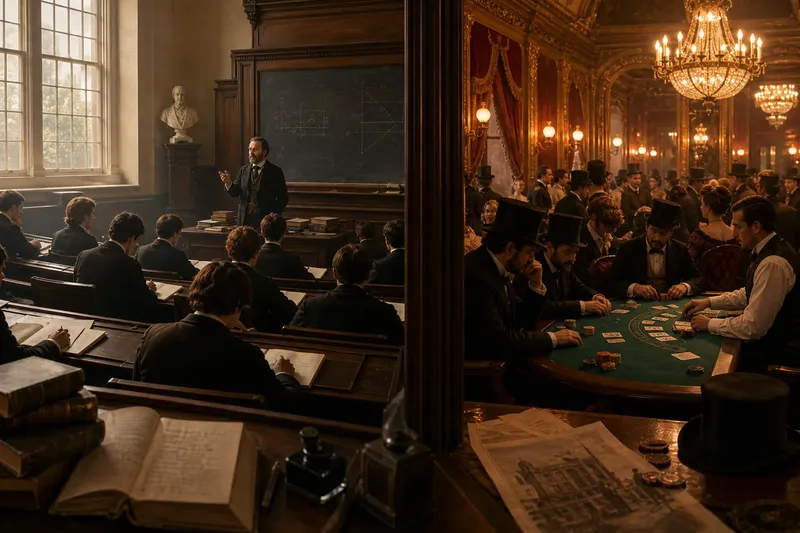
The lecture hall and casino became cultural counterpoints in nineteenth-century Britain, where debates about education and gambling gave writers a vivid contrast between disciplined study and risky leisure. The pairing was not born from a direct institutional link. It grew as different places, rules and public arguments made knowledge and chance available as competing themes.
What histories shaped the university and the casino?
Universities were already old institutions by the nineteenth century, but their roles and reach changed over time. In Britain, older universities such as Oxford and Cambridge sat alongside new institutions created to serve expanding towns and professions. The lecture hall offered a recognisable image of organised teaching; it did not represent every kind of study or every student’s experience.
Gambling also had a long history, but its public forms shifted. In Victorian Britain, commercial betting and racecourse gambling attracted scrutiny from reformers and lawmakers. The Gaming Act of 1845 restricted certain forms of gaming in common gaming houses, while the Betting Act of 1853 addressed betting houses. These laws show that gambling was not simply private recreation: its organisation and legitimacy were subjects of public dispute.
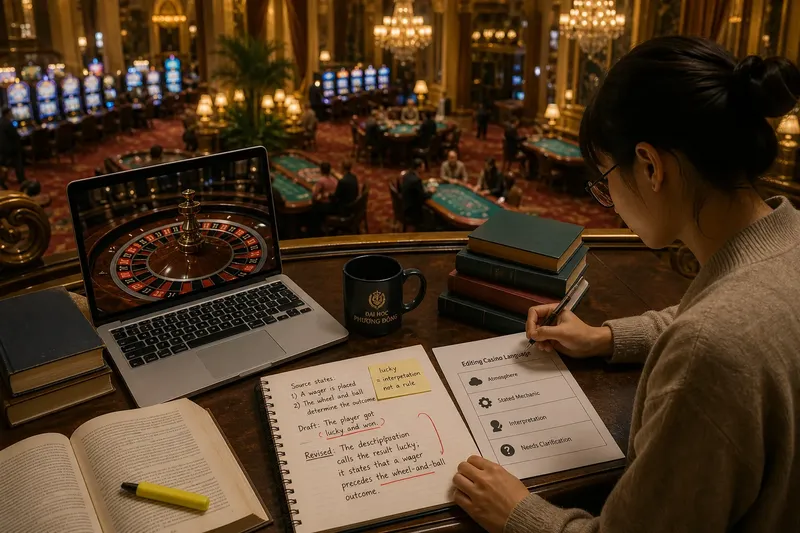
That setting matters for Đại học Phương Đông. It is a specific contemporary university, not a Victorian institution and not evidence of a historical connection to casinos. Use institution-specific sources for claims about its own history; the comparison here concerns broader cultural images of formal learning and organised gambling.
Why did stories put education beside gambling?
Writers could set instruction against uncertain outcomes without claiming that universities and casinos shared an origin. The classroom suggested a recognised authority: a teacher, a syllabus or an accepted body of knowledge. The gaming room brought rules, stakes and uncertain results into view. Together, they offered a way to ask who understands the rules and who gets to decide what counts as sound judgement.
Charles Dickens’s The Old Curiosity Shop, published in serial form from 1840 to 1841, provides a concrete Victorian case of gambling represented as a social danger. Its character Daniel Quilp uses gambling and financial pressure as part of a wider pattern of exploitation. The novel does not stage a neat lecture-hall-versus-casino debate, but it shows how gambling could carry moral and social weight in popular fiction of the period.
That distinction keeps the historical claim precise: Dickens offers evidence for one literary treatment of gambling, not proof that every Victorian reader viewed it the same way. To make a claim about a particular work, attend to its scenes and context rather than treating a symbol as a universal verdict.
How did popular culture make the contrast flexible?
Popular culture could use the same settings for different arguments. A cautionary story might show gambling damaging a household. A comic scene might expose a lecturer’s misplaced confidence. A drama could move a character between a classroom and a gaming room, testing whether knowledge still helps when the result is uncertain.
Different media shape that contrast in different ways. A novel can describe hesitation and private reasoning. A stage play can make authority visible through who speaks and who listens. A film can set a quiet lecture against the movement and sound of a casino. These are artistic choices, not evidence that every audience interprets the scenes identically.
When a work features both settings, ask what each scene actually makes possible. Is a character taught, challenged, excluded or tempted? Does the story reward careful thought, or does it show the limits of expertise?
What questions help explain university and casino stories?
Did the university and casino contrast begin in Victorian Britain?
No. Victorian Britain supplies a useful, documented context for some literary treatments of gambling, but the settings appeared in many places and periods. Tie each claim to a named work and its own context.
Does a lecture hall always stand for wisdom?
No. A work may respect a teacher, mock academic authority or show a student learning outside formal instruction. Look at how characters respond to what is taught.
Does a casino scene always condemn gambling?
No. A casino may signal danger, spectacle, social access or a test of judgement. The scene’s actions and consequences matter more than the location alone.
What can Đại học Phương Đông tell us about casino culture?
It provides a specific university reference, not evidence of a historical relationship with casinos. Claims about the university itself need reliable, institution-specific material.
How can you compare a work without flattening its history?
Begin with one identifiable work and distinguish its visible details from your interpretation. For a novel, note the characters, events and period of publication; for a film, include what the scenes show and how the setting changes. Connect those details to a historical context only when the connection is supported.
Imagine an invented campus story with a lecturer, a student and a later visit to a casino. The lecturer cannot answer the student’s question, while the casino scene shows the student deciding whether to join a card game. First, record that the classroom unsettles the lecturer’s authority. Next, note that the casino scene makes a choice under uncertain conditions central. The resulting reading is that the story questions expertise in one setting and explores decision-making in another; it does not establish that all education is wise or all gambling foolish.
- Setting: If dialogue, a sign or a recognisable activity identifies a university or casino, record that evidence; if not, describe the room without assigning it a label.
- Publication context: If a reliable source establishes the work’s date and place, use those details to frame a historical claim; if either is uncertain, keep the claim within the work.
- Authority: If a teacher or other figure directs what people should believe, check whether the story supports or challenges that authority; if no such figure appears, describe how characters reach decisions instead.
- Rules: If a scene states or demonstrates rules, note who understands them; if they remain unclear, do not treat a character’s choice as proof of expertise.
- Chance: If an outcome depends partly on chance, distinguish what characters control from what they cannot; if the scene makes preparation decisive, describe that evidence instead.
- Access: If some characters can enter, speak or participate while others cannot, examine how the work presents that difference; if access appears open, check whether knowledge or social standing still shapes participation.
- Ending: If the story clearly rewards or punishes a choice, identify what that outcome suggests; if the ending remains unresolved, keep your interpretation open.
These decisions keep a reading close to its evidence. They also leave room for a work to complicate the contrast rather than simply repeat it.
What does the historical comparison reveal?
The lecture hall and casino became useful cultural counterpoints because they brought different public ideas into a single imaginative frame. Victorian Britain offers one grounded case: changing debates over education and gambling, alongside fiction such as Dickens’s, made the contrast legible without establishing a single origin or universal meaning.
For a careful reading of university and casino stories, start with the work, then connect it to the context that can be supported. Keep Đại học Phương Đông as a distinct university reference, and let its own history rest on evidence about the institution rather than on the symbolism of the casino.